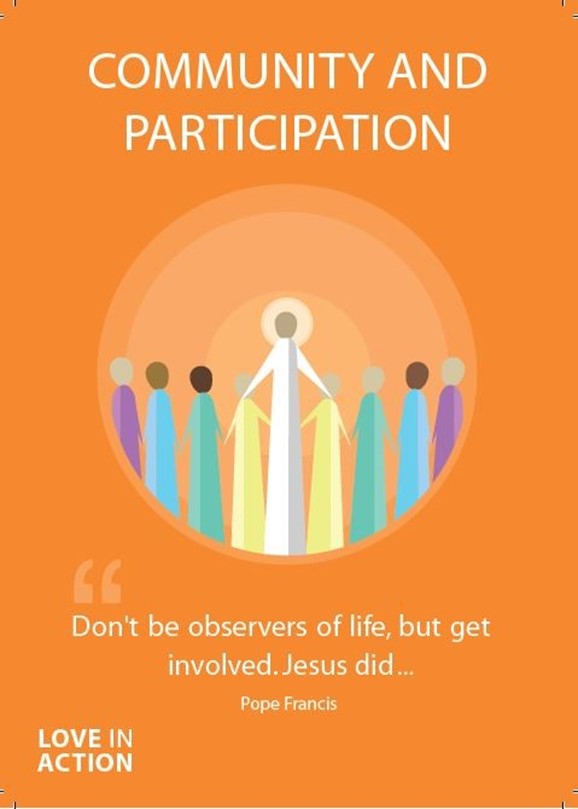
Community and participation are important principles in Catholic social teaching. They emphasise the value of human relationships, the common good, and the active involvement of individuals in society.
Community refers to the understanding that humans are social beings who are interconnected and dependent on one another. It recognises the inherent dignity and worth of every person and promotes the idea that individuals are called to live in solidarity with others. In the context of Catholic social teaching, community emphasises the importance of fostering inclusive and supportive communities that promote the well-being and flourishing of all members.
Participation, on the other hand, highlights the active engagement of individuals in social, economic, and political life. It recognises that every person has a right and a responsibility to contribute to the common good and to participate in decision-making processes that affect their lives and the lives of others. Catholic social teaching encourages individuals to exercise their rights and responsibilities as active citizens, advocating for justice, equality, and the dignity of all.
Together, community and participation in Catholic social teaching emphasise the importance of building inclusive communities that promote the well-being of all individuals and encourage active participation in shaping a just and compassionate society.
‘Do we open ourselves to the Holy Spirit so as to be an active part of our communities, or do we close in on ourselves, saying ‘I have so many things to do, that’s not my job’?’ Pope Francis